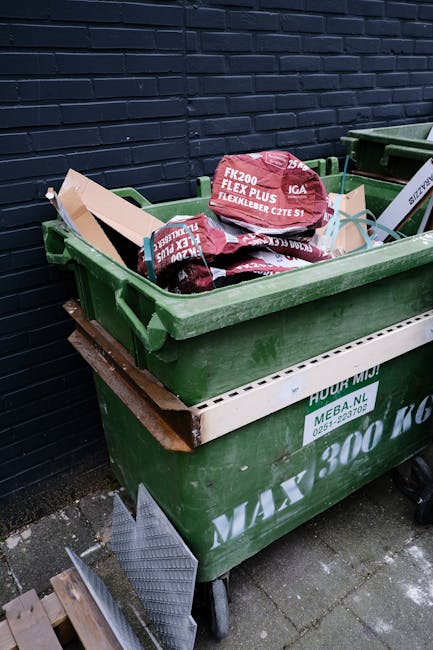
Urgent Builder's Waste Clearance for Edmonton Renovations
If you are mid-renovation and the floor is already covered in broken plaster, timber offcuts, old kitchen units, and dust that seems to get into everything, you are not alone. Urgent builder's waste clearance for Edmonton renovations is one of those jobs that suddenly becomes the difference between a project moving forward and a site grinding to a halt. One skipped collection can mean blocked access, frustrated trades, and a mess that feels bigger by the hour. Truth be told, renovations generate waste faster than most people expect.
This guide breaks down what urgent builder's waste clearance actually involves, how it works in Edmonton, when it makes sense to book it, and how to avoid the common mistakes that slow projects down. You will also find practical guidance on compliance, planning, and choosing the right disposal approach for a renovation site. If you need broader support, it can help to look at house clearance services alongside renovation waste removal, especially where a project includes both strip-out material and household items.
Before we get into the details, here is the simple version: if the waste is getting in the way of your build, it needs clearing quickly, safely, and in a way that does not create a second problem later. That is what this article is for.
Table of Contents
- Why Urgent Builder's Waste Clearance for Edmonton Renovations Matters
- How Urgent Builder's Waste Clearance for Edmonton Renovations Works
- Key Benefits and Practical Advantages
- Who This Is For and When It Makes Sense
- Step-by-Step Guidance
- Expert Tips for Better Results
- Common Mistakes to Avoid
- Tools, Resources and Recommendations
- Law, Compliance, Standards, or Best Practice
- Options, Methods, or Comparison Table
- Case Study or Real-World Example
- Practical Checklist
- Conclusion
- Frequently Asked Questions
Why Urgent Builder's Waste Clearance for Edmonton Renovations Matters
Renovation waste is not just an eyesore. It gets in the way of almost everything that follows. A pile of rubble can stop a plasterer from reaching a wall, make a flooring install unsafe, and turn a simple delivery into a frustrating shuffle around a narrow hallway. In smaller Edmonton homes, or on tight London streets, that problem shows up fast.
Urgent clearance matters because renovation work rarely runs in neat stages. A kitchen strip-out might create a mountain of broken tiles by lunchtime, and by the next morning the site may need to be clear for electricians or carpenters. When waste hangs around, the job site feels cluttered, and clutter tends to breed delays. There is the practical side too: loose nails, sharp offcuts, shattered masonry, and heavy bags of mixed debris all increase the risk of trips and injuries.
There is also a reputation angle for trades and property owners. A tidy work area tends to signal control, especially where neighbours can see into the site or access is shared. Nobody loves seeing an alley, driveway, or front garden used like a dumping ground. To be fair, most people understand renovations make a mess. What they do not appreciate is avoidable mess lingering for days.
For homeowners, it is about keeping the project moving without losing momentum. For builders and contractors, it is about protecting labour time. Every hour spent stepping around debris is an hour not spent finishing the work.
If you are managing a larger property project, it can also help to think about waste clearance as part of the wider service plan. Some clients combine it with commercial clearance solutions for mixed-use buildings or investment properties where renovation debris and leftover contents need handling together. Different job, same basic principle: clear the site properly, and the rest becomes easier.
Practical takeaway: urgent waste clearance is not only about speed. It protects safety, keeps trades working, and helps the whole renovation feel organised instead of chaotic.
How Urgent Builder's Waste Clearance for Edmonton Renovations Works
In practice, urgent builder's waste clearance is usually a fast-response service that removes renovation debris from a property, driveway, garden, or worksite as quickly as possible. The exact process varies, but most jobs follow the same pattern.
What happens during a typical clearance
First, the waste is assessed. That means looking at the type, volume, weight, access route, and whether any items need special handling. Builder's waste is often mixed: plasterboard, bricks, timber, metal, packaging, flooring, and old fixtures can all end up in the same pile. Good clearance planning starts with separating what can be removed safely and efficiently.
Next comes loading and removal. Depending on the job, that may involve manual loading, use of trolleys, barrows, sacks, or a vehicle parked nearby for rapid transport. If access is awkward, the crew may need to work in smaller loads. In Edmonton, where terraced streets and limited parking are common in some spots, this part can matter more than people realise.
After that, the waste is transported for appropriate sorting and disposal. The important bit here is not just getting it out of sight. It should be handled in a way that supports proper waste management, with materials separated where possible. Wood, metal, inert rubble, and mixed renovation waste are often dealt with differently.
Finally, the site is left clear enough for the next stage of work. Sometimes that means a full clean sweep. Sometimes it is a more focused clearance that leaves reusable materials stacked neatly and removes only the debris blocking progress.
What makes it urgent
Urgency usually means one of three things:
- a trade is due on site and needs access immediately
- waste has accumulated faster than anticipated and is becoming unsafe
- the property owner needs the area cleared before a deadline, inspection, or delivery
A proper urgent service should still be controlled. Fast does not have to mean careless. In fact, rushed clearance done badly is one of the quickest ways to create more work later. You do not want half-cleared rubble, a damaged hallway, or bags left behind because the team was in too much of a hurry.
Many property owners find it helpful to pair waste removal with broader clearance planning. If the renovation involves old furniture, appliances, or leftover contents, a service such as estate clearance support can sometimes be relevant when a property is being emptied before refurbishment. That is not every project, obviously, but it comes up more often than people think.
Key Benefits and Practical Advantages
The obvious benefit is speed. But there is more to it than that. When builder's waste is cleared properly and quickly, the whole renovation tends to feel calmer. Simple, but true.
| Benefit | What it means in practice | Why it matters on a renovation |
|---|---|---|
| Faster progress | Trades can get back to the work area without delay | Less downtime and fewer knock-on delays |
| Safer site | Fewer trip hazards, sharp edges, and unstable piles | Reduces avoidable accidents |
| Better organisation | Materials, tools, and waste are not mixed together | Helps the job feel controlled and easier to manage |
| Cleaner handover | The area looks ready for the next stage or final finish | Useful for inspections, client sign-off, or landlord checks |
| Less stress | Fewer things sitting around waiting to be dealt with | Small win, but it changes the feel of the project |
There is also a hidden benefit: waste clearance helps you see the site properly. Once the rubble is gone, you can usually spot unfinished edges, patching issues, measurement problems, or hidden damage much more easily. That is especially useful on older Edmonton properties where a strip-out may reveal surprises. A wonky wall or damp patch is easier to deal with once the clutter is not hiding it.
For contractors, timely clearance can protect the schedule. For homeowners, it can restore a bit of sanity. Let's face it, living beside a renovation pile for too long is draining. The dust gets everywhere, the bin bags start multiplying, and the job feels bigger every day.
Who This Is For and When It Makes Sense
This kind of service is useful for more people than you might expect. It is not just for major building firms or full-scale refurbishments. Small projects can create just as much waste, especially if a room is being stripped back to the studs.
Typical users
- Homeowners managing kitchen, bathroom, loft, or extension renovations
- Landlords preparing rental property for redecoration or upgrade
- Builders and trades needing a clear working area between stages
- Property managers dealing with turnaround work on empty or partially occupied homes
- Flippers and investors who need fast site reset between demolition and finish work
When it makes the most sense
Urgent clearance is usually the right call when the waste pile is stopping another trade from starting, when access has become awkward, or when the debris is starting to look unsafe. It also makes sense if bags are piling up faster than you can dispose of them through ordinary household channels.
Here is a very common scenario: the electrician is booked for Thursday, but the strip-out team leaves behind old units, plasterboard, and a stack of broken tiles. On Wednesday afternoon, someone realises the room cannot be worked in properly. That is the moment when urgent collection stops being optional.
There are also times when a planned skip hire simply is not the best fit. If there is no space outside, if the volume is moderate but awkward, or if you need the waste gone the same day, a fast clearance visit can be more efficient.
For people dealing with a larger site where cleaning and removal overlap, it may also be worth considering office clearance services if the building includes workspaces, back offices, or mixed-use rooms. Different spaces often need different handling, and a one-size-fits-all approach can become messy very quickly.
Step-by-Step Guidance
If you want the clearance to go smoothly, a little preparation makes a big difference. The good news is that the process itself is straightforward when everyone knows what is being removed and what needs to stay.
- Identify the waste types. Make a quick list of what is on site: rubble, timber, plasterboard, old fixtures, packaging, metal, or mixed debris.
- Separate anything reusable or sensitive. Keep tools, documents, fixtures, and items you want to retain away from the clearance zone.
- Check access routes. Measure gates, hallways, stairwells, and parking restrictions if the property is on a tight street.
- Flag hazards. Nails, broken glass, asbestos suspicion, wet plaster, or unstable piles should be noted before removal begins.
- Book the right level of service. A small kitchen strip-out and a full house renovation create very different clearance needs.
- Confirm timing. Make sure the clearance window fits around trades, deliveries, or neighbour access.
- Clear a path. Even a few minutes moving loose materials out of the way can save a lot of labour time.
- Check the finish. After removal, walk the area and make sure nothing important has been overlooked.
One thing people often forget is the "in-between" material. It is not just the heavy rubble. Cardboard, dust sheets, broken pallets, old trims, and snapped lengths of wood can eat up more space than expected. The site can look almost clear and still be difficult to work in. Annoying, but common.
If you are coordinating removal as part of a larger clearance sequence, it may help to keep a small staging area. A corner for salvage, a corner for waste, and a corner for tools. It sounds almost too simple, yet it saves arguments on busy days.
Expert Tips for Better Results
In our experience, the best renovation clearances are the ones that are planned before the pile gets out of hand. A few small habits make a noticeable difference.
1. Clear in stages, not just at the end
If possible, remove waste after each major phase. Strip-out waste goes first, then packaging and offcuts, then finishing debris. This keeps the site breathable, and yes, that is a real advantage when you have been sanding all day and the air feels gritty.
2. Keep heavier waste separate where practical
Rubble, bricks, and broken tile are much easier to deal with if they are not mixed with soft waste and packaging. Sorting by material can reduce confusion and improve loading efficiency. It also helps the people doing the lifting, which matters more than many realise.
3. Leave access as open as you can
Even a decent clearance team cannot work miracles if the path is blocked by furniture, tools, or trade materials. A little extra space at the doorway or gate can make the job faster and safer.
4. Be realistic about volume
People often underestimate how much waste they have. A small bathroom strip-out can turn into far more bags than expected once old plaster, tiles, backing boards, and packaging are added up. Better to overestimate slightly than be caught short.
5. Think about weather and timing
Rain, cold, and poor light can all make exterior waste handling slower, especially in the evening. If a clearance needs to happen near dusk, make sure the route is well lit and the area is safe to move through.
A slightly funny truth: the smallest renovation mess somehow breeds overnight. You think, "We will sort that tomorrow," and by tomorrow there are three more bags, a broken panel, and a mysterious pile of offcuts no one admits owning. Happens all the time.
For broader property projects, it can also be sensible to align clearance with other support services. For example, if a renovation includes both debris removal and a full property reset, looking at bereavement house clearance may be relevant in sensitive situations where a property is being emptied before work begins. That is not a typical builder's waste job, but it is part of the same wider clearance landscape.
Common Mistakes to Avoid
A lot of waste clearance problems come from simple, avoidable oversights. None of this is dramatic. It is just the kind of thing that quietly eats time and money.
- Waiting too long. If the waste pile is already blocking access, you are late. Not hopeless, just late.
- Mixing everything together. Mixed waste is harder to handle and may slow down the whole process.
- Ignoring hidden hazards. Sharp materials, broken glass, and suspected hazardous items need care before anyone starts loading.
- Blocking the access route. A clearance team should not have to climb over sinks, ladders, and toolboxes to reach the debris.
- Assuming every service is the same. Builder's waste removal, house clearance, and skip hire each suit different situations.
- Forgetting the final check. It is easy to miss a bag, a strip of metal, or a stack of dusty boards tucked behind a door.
The most expensive mistake is usually not the waste itself. It is the delay that follows. One missed clearance can push back finishing work, which then affects handover, decoration, or the next trade booking. Once that happens, the whole rhythm of the renovation feels off.
A good rule of thumb: if a pile is making you step around it twice, it is already costing you more than you think.
Tools, Resources and Recommendations
You do not need a warehouse full of equipment to manage renovation waste well. A few sensible tools and habits go a long way. The aim is not perfection. The aim is control.
Useful on-site tools
- heavy-duty rubble sacks
- gloves with proper grip
- dust masks for fine debris
- barrows or trolleys for awkward loads
- floor protection to prevent damage during loading
- basic lighting for dim hallways, lofts, or back access points
Planning resources that help
A simple written list of what needs removing is often better than relying on memory. Add notes about access, parking, stairs, and any items that should not be touched. If a room is in active use, mark what stays and what goes. That small bit of clarity saves back-and-forth later.
For larger projects or properties with multiple rooms, it can also help to group tasks into zones. For example: kitchen waste, bathroom waste, upper-floor waste, and garden waste. That structure makes it easier to track progress and keeps the site from becoming a jumble.
If the renovation involves clearing out a whole property before works begin, services like full house clearance or a more targeted clearance approach can provide a better fit than ad hoc disposal. The key is choosing the service that matches the job, not the one that sounds most convenient in the moment.
Law, Compliance, Standards, or Best Practice
Waste removal touches on compliance, and it is worth treating that seriously. This section is not legal advice, but it reflects normal UK practice and the sort of common-sense care that protects everyone involved.
First, waste should be handled by people who are authorised to carry it and who can dispose of it appropriately. If you are a homeowner or contractor arranging removal, you should be satisfied that the waste is going to a lawful destination and being managed responsibly. In practice, that means asking sensible questions rather than assuming all removal is equal.
Second, some renovation waste may need special attention. Items suspected of containing hazardous material, or materials that look unusual, should not simply be bundled in with ordinary rubble. When in doubt, stop and check. That is the safer move, every time.
Third, duty of care matters. Even where a job is urgent, waste should not be dumped, fly-tipped, or left in a way that creates nuisance for neighbours or public access. In a place like Edmonton, where people live close together and access routes can be tight, good practice is as much about respect as it is about procedure.
Finally, there are site safety expectations that make good sense on any renovation. Keep access clear, reduce slip and trip hazards, and do not ask workers to lift items they cannot safely handle. Small things. Big consequences when ignored.
If you are unsure whether your waste includes anything that needs special handling, do not guess. A careful assessment at the start is much better than a problem halfway through the job.
Options, Methods, or Comparison Table
There are a few common ways to deal with builder's waste. The best choice depends on space, time pressure, waste volume, and how the renovation is being managed. Here is a straightforward comparison.
| Method | Best for | Pros | Watch-outs |
|---|---|---|---|
| Urgent builder's waste clearance | Fast site reset, limited time, mixed renovation debris | Quick, flexible, less waiting around | Needs clear communication about access and volume |
| Skip hire | Longer projects with space for a skip | Handy for gradual fill, good for ongoing work | Needs space and may not suit tight access |
| Self-managed disposal | Very small loads and experienced organisers | Can work for minor jobs | Time-consuming, tiring, easy to underestimate the effort |
| Scheduled full clearance | Whole-property reset or deeper strip-out | Useful for larger planning windows | Less suitable if the site needs immediate clearing |
If you are torn between options, ask a practical question: what stops the project most right now? If it is access, urgency, or awkward debris, rapid clearance usually wins. If it is a longer project with steady waste generation and enough space outside, skip hire may still make sense. There is no universal winner. Just the best fit for the job in front of you.
Case Study or Real-World Example
Here is a realistic example. A homeowner in Edmonton is renovating a small two-storey terrace. The kitchen has been stripped, old tiles are in sacks, and a stack of timber and plasterboard is sitting in the hallway. The electrician is booked for the following morning, but the hallway is too tight to work through safely. The dust is already in the air, and every footstep seems to make the place feel more cramped.
In that situation, urgent clearance makes immediate sense. The waste is not complicated, but it is in the way. A same-day or next-day removal clears the route, reduces the chance of damage to walls and flooring, and gives the electrician a proper working space. The homeowner also gets a bit of breathing room, which honestly matters more than people think when you are living through a renovation.
Another common version of this happens on a rental property turnaround. The old bathroom is out, packaging and rubble are stacked in the back garden, and the decorator cannot start because access is blocked. A quick clearance means the next trade can begin on time. No drama. No long delay. Just the site reset and moving again.
These are not glamorous problems. They are the everyday realities of renovation. But solving them well is what keeps the whole project from turning into a headache.
Practical Checklist
Use this before booking urgent clearance for an Edmonton renovation.
- Identify the main waste types on site
- Separate anything you want to keep
- Check access through doors, gates, hallways, and stairs
- Note parking constraints or loading restrictions
- Look for any sharp, heavy, or potentially hazardous materials
- Make sure the route to the waste is clear enough to work safely
- Confirm whether the job needs same-day or next-day removal
- Estimate whether the waste is mixed, bulky, or mainly rubble
- Coordinate timing with trades already booked on site
- Do a final walk-through after the clearance is complete
Quick summary: the smoother the access and the clearer the instructions, the faster the clearance goes. It really is that simple. A bit of prep up front saves a lot of frustration later.
Get a free quote today and see how much you can save.
Conclusion
Urgent builder's waste clearance for Edmonton renovations is about more than removing rubbish. It keeps the project moving, protects safety, reduces stress, and helps every other trade do their job properly. Whether you are managing a small room refresh or a full property refurbishment, timely clearance can stop clutter from becoming a bottleneck.
The best results usually come from simple planning: know what needs removing, keep access open, be honest about the volume, and choose the right method for the job. If the waste is getting in the way now, waiting rarely helps. A quick, well-managed clearance often pays for itself in time saved and headaches avoided.
And if you are standing there looking at a pile of rubble thinking, "Well, that grew fast," you are in good company. Renovation waste has a habit of doing that. The good news is it does not need to stay there.
When the site is clear, the next step feels lighter. That is usually when the real progress starts.
Frequently Asked Questions
What is urgent builder's waste clearance for Edmonton renovations?
It is a fast-response waste removal service for renovation debris such as rubble, timber, tiles, plasterboard, packaging, and old fixtures. The goal is to clear the site quickly so work can continue safely and without delay.
How quickly can builder's waste usually be removed?
Timing depends on access, waste volume, and booking availability. Urgent jobs are often arranged for the same day or next day when the site needs to be cleared fast, but that is always subject to practical scheduling.
Is it better than skip hire for a renovation?
It depends on the project. Urgent clearance is usually better when you need the waste gone immediately, have limited space outside, or do not want debris sitting on site. Skip hire can work well for longer projects with room for a skip.
What types of renovation waste can be cleared?
Common builder's waste includes bricks, rubble, tiles, timber, plasterboard, metal, packaging, carpets, old units, and general strip-out debris. If anything may be hazardous or unusual, it should be flagged before removal.
Do I need to sort the waste before collection?
It helps, but it is not always essential. Sorting rubble, wood, metal, and mixed waste can make the process smoother, though many clearance jobs include mixed debris from renovation work.
Can urgent clearance help if trades are waiting to start?
Yes. That is one of the most common reasons people book it. If a hallway, room, driveway, or garden is blocked by waste, clearing it quickly can keep electricians, decorators, plumbers, and flooring teams on schedule.
What should I tell the clearance team before they arrive?
Give them the waste type, estimated volume, access details, parking limits, and any hazards. If there are items that must not be removed, make that clear too. A few minutes of good communication can save a lot of confusion.
Are there any safety concerns I should think about first?
Yes. Loose nails, broken glass, unstable piles, heavy materials, dust, and suspected hazardous items all deserve attention. If anything looks risky, do not try to force a quick fix without proper care.
How do I know if I need a full clearance or just a partial one?
If only one room or one area is blocked, a partial clearance may be enough. If the waste is spread across several rooms or affecting access throughout the property, a more complete clearance is usually the better choice.
Will urgent builder's waste clearance leave the site ready for the next trade?
That is the aim. A good clearance should leave the area open, safer, and workable for the next stage, even if some light cleaning or finishing touch-ups are still needed afterward.
Is builder's waste clearance suitable for small home renovations?
Absolutely. In fact, smaller jobs often create more disruption than people expect because the waste has less room to spread out. A modest bathroom or kitchen project can still need quick removal to keep the house usable.
What if I also need a larger property clearance alongside renovation waste?
Then a broader clearance approach may be more practical. In some cases, renovation debris is only part of the job, and combining it with a fuller property clearance can be the easier route. It depends on the site and what needs to go.